Birdy bird - Game Original
- 4.6
- Rating
- 1.00M
- Installs
- Free
- Price

 Analysis by App-foxy
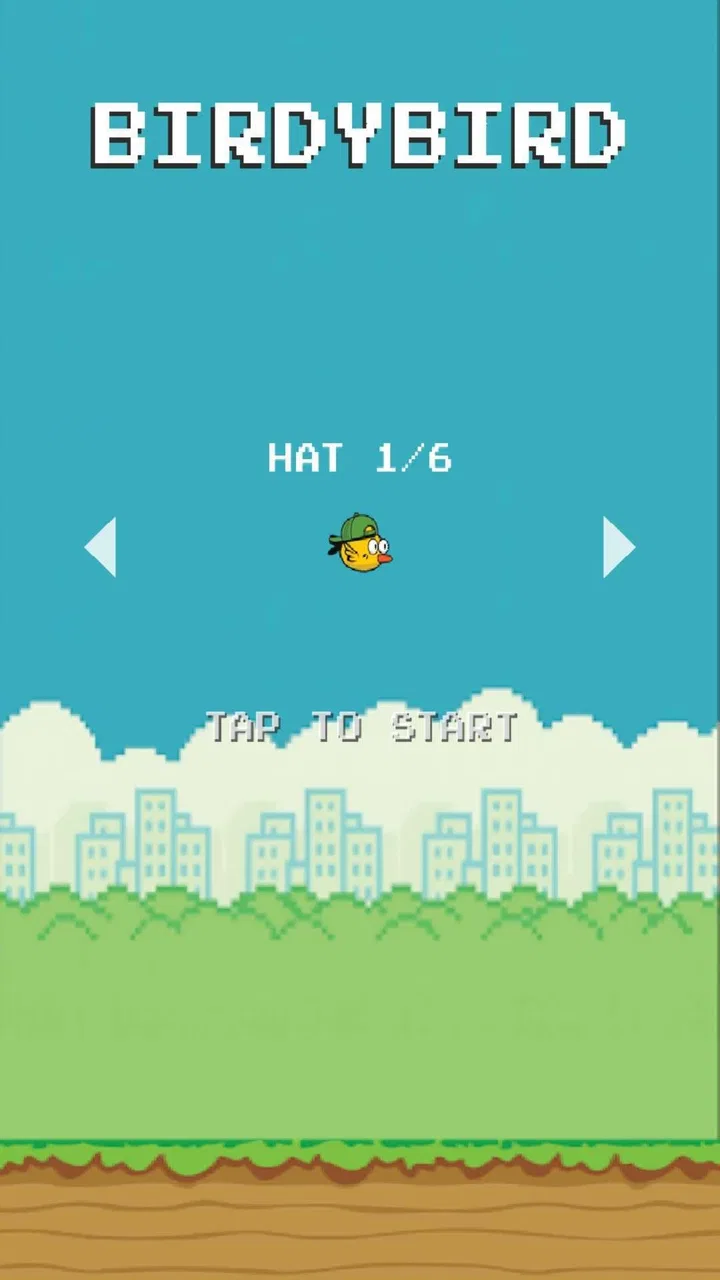
I expected a very simple arcade game when I opened Birdy bird - Game Original, and that is exactly what I found: a small, focused challenge built around one action. You tap to make the bird flap, then try to guide it through the gaps between pipes without touching them. There is no long tutorial to study and no complicated control scheme to learn. The entire appeal is visible almost immediately, but the timing takes much longer to master.
That simplicity is important because it defines both the game’s charm and its limits. I can start a round during a short break, understand the objective instantly, and stop without feeling that I have abandoned a large adventure. At the same time, anyone looking for a story, character development, varied missions, or a deep progression system will probably find this too narrow. This is a classic-style arcade game from Rectfy, offered free, with optional in-app purchases ranging from $0.49 to $4.99 per item.
How the flap-and-pipe loop feels in practice
I focus on how the bird’s movement turns a single tap into a small timing decision, and why watching its position matters as much as watching the pipes. That practical rhythm is also what makes each attempt useful: a collision can reveal whether I reacted too early or overcorrected, setting up a closer look at the feedback the game gives during a run.
You May Also Like

 Blood Strike: 2.5 Anniversary
Blood Strike’s Loadouts Turn Every Drop Into a Tactical Gamble
A close look at Blood Strike’s custom loadouts: how fast access to signature weapons reshapes its battle royale rhythm, rewards preparation, and narrows the gap between fights.

 Pandora - Music & Podcasts
Pandora’s Music Is Easy to Start, but Harder to Recover
Pandora’s strength is its low-effort path from a seed to a station. Its weak spot is how much confidence it asks you to place in connection, setup, and quiet recovery.

 8 Ball Pool
 Is Built on Rivalries, Rematches, and Routine
A close look at the rivalries, rematches, shared routines, and unanswered safety questions that turn a quick pool match into a persistent mobile community.

 Samsung Music
’s Quiet Strength Is Playing What You Already Own
Its reach comes less from spectacle than from dependable access to a personal library. That simplicity is both the app’s strongest retention engine and its ceiling.

 AccuWeather: Weather Radar
AccuWeather Review: A Quick, Clear Forecast for Everyday Decisions
For everyday plans, the best forecast is the one you can understand quickly. AccuWeather makes rain timing, radar, and local conditions easy to act on, with a few trade-offs.

 Hill Climb Racing
Why Hill Climb Racing Still Turns Crashes Into One More Run
A tiny car, a bumpy hill and one more upgrade: Hill Climb Racing keeps resurfacing because its simple chaos makes every near-miss feel personal.
More From Our News Desk



The first action is deliberately small
The first tap is the whole beginning. The bird rises, gravity pulls it back down, and I have to decide when to tap again. That makes the control easy to explain but surprisingly sensitive in play. A tap that feels harmless can lift the bird too far, while waiting a fraction too long can leave it below the next opening.
I like that the game does not bury this first action under menus or complicated instructions. The store summary describes the basic idea clearly, but playing it makes the real challenge more obvious: the goal is not simply to keep tapping. It is to create a steady rhythm while reading the bird’s position and the approaching pipe.
The control is best suited to short, direct interactions. I do not need both hands, a controller, or a quiet block of time. That makes it useful when I am waiting for an appointment or taking a brief pause between tasks. However, the same simplicity means every mistake feels connected to my timing. There are no alternate controls to rescue a poor approach, so the game quickly exposes whether I am reacting too early, too late, or too aggressively.
Feedback arrives through movement and collision
The most satisfying part of a round is the immediate feedback. A successful flap changes the bird’s height, and passing through a pipe confirms that my timing was good. A collision ends that attempt and gives me a clear reason to try again. I never have to wonder what the game wanted me to do; the next action is always obvious.
This rhythm creates a useful tension. The bird is constantly moving, so I cannot pause to plan every obstacle. I watch the gap, estimate the correction, tap, and then reassess. When the timing works, the action feels almost musical. When it fails, the mistake is usually easy to understand, even if correcting it consistently is difficult.
That clarity is one of the game’s strongest qualities. Some arcade titles add effects, objectives, or upgrade systems that distract from the central challenge. Here, the feedback stays closely tied to movement and survival. The result is less exciting as a spectacle, but more honest as a test of reflexes and concentration.
Why another attempt starts so quickly
The reset is the engine of the experience. A failed flight does not leave me with a long recovery sequence or a complicated decision about what to do next. I see that the attempt is over, recognize the timing mistake, and feel the urge to correct it immediately. That is why a short session can become several attempts without me planning to keep playing.
This is not the same motivation as progressing through a large game. I am not returning to unlock a new area or follow a plot. I am returning because the last result feels close enough to improve. A pipe that ended the run becomes a practical lesson: tap later, tap sooner, or avoid overcorrecting. The reward is the feeling of control becoming more reliable.
That loop works especially well for players who enjoy personal improvement. It is less suitable for someone who needs frequent changes in scenery or a strong sense of permanent progress. If repeating a similar challenge feels tedious to you, the quick reset may feel like repetition rather than motivation.
The reward is mastery rather than variety
In my experience, the main reward is not a collection of items or a large progression path. It is the satisfaction of surviving longer and making fewer impulsive taps. The game turns a very small skill into something I can gradually refine: reading the bird’s position, anticipating the pipe, and keeping my movements controlled.
A useful way to play is to focus on one mistake at a time. If I lose because I keep tapping too early, I try to watch the bird’s descent rather than reacting to the pipe alone. If I crash after rising too high, I reduce the strength and frequency of my corrections. This makes each attempt more informative than simply tapping faster and hoping for a better result.
Another practical tip is to avoid playing while distracted. The controls are simple enough to use casually, but the timing is not forgiving enough for divided attention. Notifications, conversation, or trying to play while walking can turn a manageable section into an avoidable collision. I get more from it when I treat a round as a brief concentration exercise rather than background entertainment.
A realistic everyday session
Imagine having a few minutes before a bus arrives. This game fits that situation better than a role-playing game or a multiplayer match because I can begin instantly and stop after a failed attempt. I might play one round, notice that I was tapping too quickly, and try again with a calmer rhythm. If the bus arrives, there is no complicated checkpoint or unfinished conversation to manage.
The trade-off is that the same session can become frustrating if I am already impatient. A short game with repeated failure does not always relax me. When I am tired, I may start tapping reactively, lose concentration, and blame the game even though the controls are doing exactly what they should. In those moments, a slower puzzle game would probably be a better choice.
What the current release means for a new player
The game is currently listed as version 5.2.8 and works on devices running Android 6.0 or later. That broad compatibility makes it approachable for people using older Android hardware, although the experience will still depend on the condition and responsiveness of the individual device. For this kind of timing game, even a small delay in touch response can affect how fair a round feels.
It is rated for Everyone, which matches the uncomplicated premise and accessible presentation. I would still distinguish between being suitable for all ages and being equally enjoyable for all players. Younger players may understand the tap immediately, while older players who prefer strategic depth may find the repeated flight loop too limited.
The game has attracted over a million installs and holds a 4.5 average from around fifteen thousand ratings, which suggests that its straightforward format has found a substantial audience. I would read those figures as evidence of broad appeal, not as a guarantee that every player will enjoy the repetition. Arcade games often divide people according to how much they value quick mastery over content variety.
Free access and the question of spending
Because the game is free to download, it is easy to test the central loop without committing money first. That is the right arrangement for this type of title: the basic action should convince me before I consider anything optional. The available in-app purchases cost between $0.49 and $4.99 per item, so I would approach them as extras rather than part of the reason to install it.
For me, the important question is whether the game remains enjoyable when I ignore spending. A simple arcade challenge should stand on its own through its controls and feedback. If I want a quick reflex game, I can try it without treating the purchase options as necessary. Parents may still want to review spending controls on a shared device, especially because the Everyone rating describes the content, not how a household manages purchases.
Where it differs from usual arcade alternatives
Compared with endless runners, this game is much more concentrated. Endless runners commonly ask me to avoid several types of hazards, collect objects, or react to changing lanes. Here, the bird’s flight and the pipe gaps remain the central concern. That makes the learning curve easier to understand, but it also removes much of the visual and mechanical variety that keeps larger arcade games fresh.
Compared with puzzle arcades, the challenge is less about planning a sequence and more about continuous timing. I cannot usually stop to calculate a move in the same way I would in a turn-based puzzle. The advantage is immediate excitement; the disadvantage is that a poor moment of concentration can end a run before I have time to recover.
Compared with multiplayer arcade games, this is a private contest with my own consistency. I do not need other players to be available, and I can play at my own pace. On the other hand, people who enjoy direct competition, team play, or social events may find the experience lonely. Its strongest comparison is with other one-touch reflex games: it wins through clarity, while it gives up breadth.
Small habits that make the challenge fairer
I found three habits particularly useful. First, I try to watch the bird’s vertical position instead of staring only at the next pipe. The pipe tells me where I need to go, but the bird tells me how much correction is still possible. Second, I avoid panic tapping after a mistake in positioning; rapid corrections often create a second mistake before the first one has been solved.
Third, I use short practice sessions rather than forcing a long streak. After several failed attempts, my reactions become hurried and I stop learning from each collision. Taking a break and returning later can be more productive than continuing to repeat the same error. This is a subtle strength of the format: because each attempt is compact, improvement does not require a major time commitment.
There is also a useful distinction between learning the control and chasing a result. During the first few sessions, I get more value from identifying my timing pattern than from worrying about how far I have gone. Once the movement becomes familiar, longer survival feels like a natural consequence of better decisions rather than a lucky accident.
Who should install it, and who should skip it
I would recommend it to anyone who likes stripped-down arcade games, quick reflex tests, and attempts that restart without ceremony. It is particularly suitable for short breaks, older Android devices that meet the minimum requirement, and players who enjoy improving through repetition. The free entry point also makes it easy to see whether the tap-and-flight rhythm suits you.
I would skip it if I need a campaign, a story, extensive customization, or a constantly changing set of objectives. I would also choose another game if repeated collisions make me more annoyed than motivated. A richer endless runner may be better for someone who wants collecting and exploration, while a puzzle game may suit someone who prefers deliberate decisions over real-time reactions.
My final view of the loop
Birdy bird - Game Original understands that a focused arcade game does not need many systems to create a compelling session. The action is one tap, the feedback is immediate, the reward is improved control, and the reset removes every barrier to trying again. That structure is simple, but it is not empty: the small differences between a good flap and a bad one give the game its entire skill curve.
My main reservation is also the source of its identity. Once the basic timing is familiar, the experience depends heavily on whether I enjoy repeating the same kind of challenge. There is little reason to stay if personal improvement does not interest me. For the right player, though, that restraint is refreshing. Rectfy has made a compact game that works best when I want a quick, readable test rather than a large destination.
With an Everyone rating, a free starting point, and a substantial audience reflected in its 4.5 average, it is easy to recommend as a low-risk arcade experiment. I would not call it a universal choice, but I would suggest trying it when you want a game that begins immediately, explains itself through play, and makes one more attempt feel tempting for a very specific reason: the next flight might finally be the one where your timing holds.
FAQs for Birdy bird - Game Original
01What is Birdy bird - Game Original, and how is it played?
Birdy bird - Game Original is a simple arcade-style game focused on guiding a bird through obstacles while trying to achieve the highest possible score. The controls are usually easy to understand, making it suitable for short play sessions. Success depends on timing, concentration, and learning how the bird responds to each tap or touch.
02Is Birdy bird - Game Original suitable for children and casual players?
Yes, Birdy bird - Game Original is generally designed for casual players and can be easy for children to understand because its gameplay is based on straightforward controls and visual feedback. However, the increasing difficulty may require patience and practice. Parents should still review the app’s store information, advertising, and permissions before allowing younger children to play.
03Does Birdy bird - Game Original require an internet connection?
The core gameplay of Birdy bird - Game Original may be playable without a constant internet connection, which makes it convenient for travel or quick offline sessions. Nevertheless, certain features, advertisements, updates, leaderboards, or promotional content may require access to the internet. It is best to check the latest store description because offline availability can change between versions.
04Are there advertisements or in-app purchases in Birdy bird - Game Original?
Before downloading Birdy bird - Game Original, users should check whether the current version contains advertisements or optional in-app purchases. Free arcade games commonly use ads to support development, and some versions may offer paid options to remove them or provide additional content. Store listings can change, so reviewing the pricing section and purchase details is recommended.
05What should I check before installing Birdy bird - Game Original on Android or iOS?
Before installing Birdy bird - Game Original, confirm that your device meets the required operating-system version and has enough available storage. You should also review the developer name, recent update date, ratings, privacy information, and requested permissions. If the game has limited support or older graphics, checking screenshots and user reviews can help you decide whether it matches your expectations.
Pros
- Simple controls make it easy to start playing immediately.
- Short rounds are ideal for quick breaks or casual sessions.
- The bird-themed presentation is bright
- friendly
- and easy to understand.
- Increasing difficulty gives skilled players a reason to keep improving.
- Lightweight gameplay should run comfortably on many mobile devices.
Cons
- Gameplay may feel repetitive after extended sessions.
- High-score progression can become frustrating after repeated failures.
- The game may offer limited variety beyond its core obstacle challenge.
- Some players may find the experience too simple for long-term play.
- Ads or in-app purchases could interrupt the otherwise quick gameplay.

Birdy bird - Game Original
Gallery